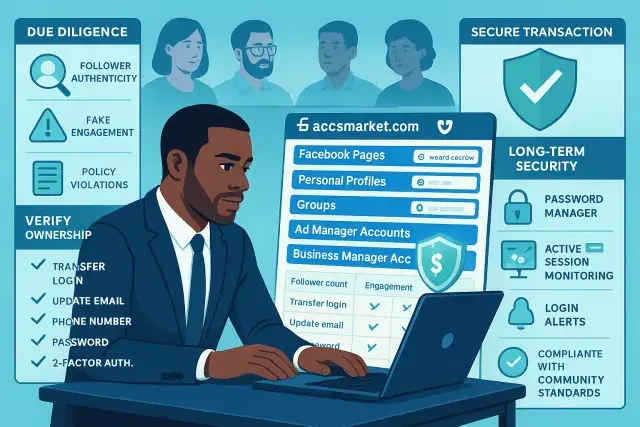
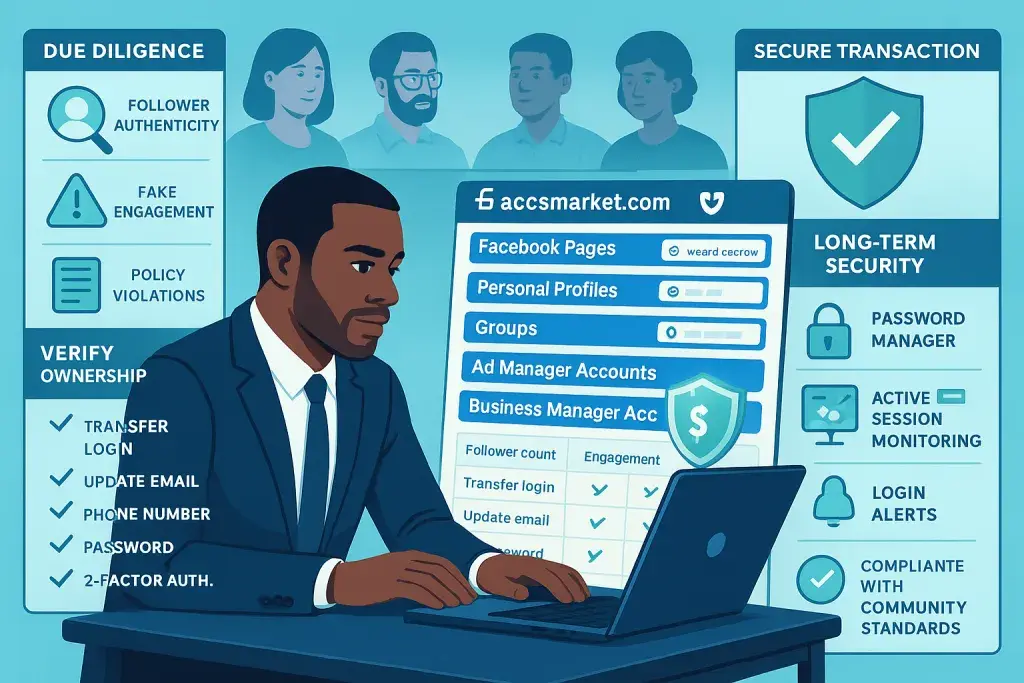
Building a social media following from zero is a grind that takes years - and most businesses simply do not have that time. An established Facebook page with tens of thousands of engaged followers represents something genuinely valuable: an existing audience, an algorithmic track record, and a platform ready for immediate use. That reality has given rise to a legitimate and growing market for acquiring social media assets, where buyers can skip the cold-start phase entirely and invest in pages that already have traction.
The opportunity is real, but so are the risks. Fraud, inflated metrics, incomplete ownership transfers, and post-purchase account loss are all common outcomes for buyers who approach the process without a clear framework. Reputable services exist specifically to reduce those risks - platforms where verified sellers list authenticated assets and transactions are protected by escrow systems. If you are considering this route, you can buy a Facebook account through accsmarket.com, a dedicated marketplace that organizes listings by category, niche, and account characteristics for easier evaluation.
This article covers the complete process: how the market works, how to evaluate listings properly, how to execute a safe transaction, how to take full control of credentials after transfer, and how to protect your asset long-term. Every section addresses decisions a real buyer faces, not theoretical scenarios.
Understanding the Market: Why People Acquire Established Facebook Pages and Social Media Profiles
The case for acquiring an established social media asset comes down to one practical reality: organic growth on Facebook has become significantly harder. Declining organic reach, increased competition for attention, and algorithm changes that favor established pages over new ones have made the traditional path to audience building slower and more expensive than it once was.
For many buyers, the decision to purchase a social media profile is not about vanity metrics - it is a calculated business decision. An established page with real engagement can immediately support advertising campaigns, affiliate promotions, community building, or brand visibility in ways that a brand-new page simply cannot. The existing follower base provides social proof, and the page's algorithmic history gives it a foundation that takes months or years to build from scratch.
The buyer profiles in this market are diverse:
- Entrepreneurs launching new businesses who need immediate social media presence in a competitive niche
- Digital marketers seeking targeted pages to promote affiliate or partner products to relevant audiences
- Agencies acquiring pages on behalf of clients who require rapid audience reach
- Content creators expanding into new topic areas with an existing follower base already in place
- Investors who treat high-engagement social media profiles as digital assets with resale or monetization value
Understanding your own purpose before entering the market matters more than most buyers realize. A page suitable for affiliate marketing looks very different from one suited to brand promotion or community management. The best marketplaces allow filtering by niche, follower count, engagement level, and account age - but only buyers who know what they need can use those filters effectively. Clarity about your goals is the prerequisite for every subsequent decision in the acquisition process.
How Facebook Account Marketplaces Work
A Facebook account marketplace is a structured platform that connects sellers of established Facebook pages, profiles, and related assets with buyers who want to acquire them. These platforms range from highly professional escrow-based services with verification systems to loosely moderated forums where risks are considerably higher. Understanding how these marketplaces operate helps buyers choose the right one and avoid common structural pitfalls.
Types of Assets Available
Not all listings in a social media asset marketplace represent the same type of product. Buyers who conflate different asset types often end up with something that does not serve their actual needs. The main categories worth understanding are:
- Facebook Pages: Business or public pages with follower counts, engagement history, and established niche categorization - the most commonly traded asset type
- Personal Profile Accounts: Individual user accounts, often sought for ad account management, group administration, or the credibility that comes with an aged account history
- Facebook Groups: Active communities organized around specific interests, particularly valuable for marketers targeting defined audience segments
- Ad Manager Accounts: Accounts with established ad spend history and verified billing information, highly sought after by advertisers who want to bypass new account spending limits
- Business Manager Accounts: Structured accounts that allow management of multiple pages and ad accounts, useful for agencies and large-scale advertisers
Each asset type serves different purposes and carries different risk profiles. Ad Manager and Business Manager accounts, for example, are more technically complex to transfer and require more thorough verification of their compliance history before purchase.
How Sellers and Buyers Connect
Reputable marketplaces act as structured intermediaries. They verify seller identities, authenticate the assets being listed, and hold funds in escrow until the buyer confirms successful receipt and full access. This intermediary layer is what separates a legitimate marketplace transaction from a high-risk peer-to-peer deal conducted through social media or private messaging channels.
The features that distinguish trustworthy platforms from unreliable ones are worth evaluating carefully before committing to any marketplace:
- Documented seller verification and account authentication processes
- Escrow or platform-secured payment systems that release funds only after buyer confirmation
- Transparent dispute resolution mechanisms with clear timelines
- Listing data that includes account age, follower history, engagement metrics, and niche categorization
- Explicit refund and replacement policies for cases where transferred accounts do not match their descriptions
- Verifiable user reviews from previous buyers and sellers
Any platform that cannot clearly answer questions about these features should be treated with skepticism. The marketplace infrastructure is what makes a complex, trust-dependent transaction manageable.
Pricing Factors in the Marketplace
Prices in any Facebook account marketplace reflect a combination of measurable asset attributes and market demand for specific niches. Understanding what drives pricing helps buyers identify fair deals and recognize when a listing is either overpriced or suspiciously cheap.
| Pricing Factor | What It Measures | Impact on Price |
|---|---|---|
| Follower Count | Total number of page followers or profile connections | Higher counts increase price, but engagement quality matters more |
| Engagement Rate | Likes, comments, and shares relative to reach | High engagement commands significant premium pricing |
| Account Age | How long the account has been active on the platform | Older accounts are consistently valued higher due to algorithmic trust |
| Niche Relevance | Specificity and advertiser demand within the audience category | High-demand niches with targeted audiences increase value substantially |
| Ad Spend History | Previous advertising activity and billing verification status | Clean ad history adds considerable value, especially for advertisers |
| Verification Status | Whether the account holds a platform verification badge | Verified accounts carry a notable price premium |
A page with 80,000 followers but a 0.3% engagement rate is often worth less in practical terms than a page with 12,000 followers and consistent, genuine interaction. Buyers who focus solely on follower count as a value indicator frequently overpay for assets that underperform.
Due Diligence: Evaluating a Listing Before You Acquire a Facebook Page
Due diligence is not an optional preliminary step - it is the core of a responsible acquisition. Buyers who rush past this phase because a listing looks attractive or the price seems right are the most common victims of post-purchase disappointment and fraud. A thorough evaluation before committing funds protects you from problems that cannot be easily undone after the transaction closes.
Verifying Follower Authenticity and Engagement Quality
A follower count means nothing if the followers are not real people. Artificial inflation through bot accounts or purchased fake followers is widespread enough in the resale market that every buyer must treat it as a default concern rather than an edge case. Several third-party tools allow independent auditing of social media account authenticity, and using them before any purchase is a basic precaution.
The warning signs that suggest artificial inflation are recognizable once you know what to look for:
- Follower counts that spiked sharply over short periods without corresponding content events or viral moments
- Engagement rates that are disproportionately low relative to follower count - sustained rates below 0.5% on Facebook warrant scrutiny
- Comments that are generic, repetitive, or obviously templated, suggesting automated activity
- Follower demographics that are geographically concentrated in regions unrelated to the page's content or language
- A clear mismatch between the page's stated niche and the audience's actual interests or demographics
Request page insights directly from the seller or ask for screenshots of audience analytics. Cross-reference what they provide against independent audit results. Any resistance to sharing this data is itself a meaningful signal.
Checking Account Health and History
Even a page with a genuinely engaged following can carry hidden risks if the account has a troubled history on the platform. Prior policy violations, content strikes, and advertising restrictions can limit what you are able to do with the page after acquisition - and sellers are not always forthcoming about this information.
Before you decide to acquire a Facebook page, work through these verification steps in sequence:
- Ask the seller directly whether any active restrictions, content warnings, or advertising limitations are currently applied to the account
- Review the page's visible posting history for content that conflicts with platform Community Standards
- Confirm that no pending policy reviews or active appeals are associated with the account
- Ask whether the page has been previously sold or transferred, and how many times
- Verify that the email address and phone number linked to the account are included in the transfer and can be changed to your own
Accounts that have been sold multiple times are not automatically problematic, but frequent transfers can attract platform scrutiny. An account's transfer history is relevant context for assessing long-term stability.
Confirming Ownership and Transfer Capability
One of the most consequential checks before completing a purchase is confirming that the seller actually holds full ownership of the asset - not just administrative access. The distinction matters considerably. A seller who is an admin on a page but not the original owner may not have the ability to remove other admins, transfer primary control, or provide all associated login credentials.
Buyers should explicitly confirm that the seller can provide the primary account email address, the linked phone number, and all two-factor authentication credentials as part of the transfer. Any seller who cannot demonstrate full ownership control before payment should not be trusted with your money. Verifying these details in advance prevents scenarios where you pay for an asset you cannot fully control after the transaction.
Step-by-Step Process to Safely Purchase a Social Media Profile or Facebook Page
Once due diligence is complete and a listing passes your evaluation criteria, the purchase process itself follows a clear sequence. Deviating from this sequence - even partially - reintroduces risks that the structure is specifically designed to eliminate.
- Select a reputable marketplace: Choose a Facebook account marketplace that offers verified listings, escrow payment protection, and documented dispute resolution procedures before searching for specific assets
- Identify and evaluate your target listing: Apply the full due diligence framework - follower authenticity, account health, and ownership verification - before expressing interest
- Initiate contact through the marketplace platform only: Keep all communication within the marketplace's messaging system; moving to private email or external apps removes you from the platform's buyer protections
- Request additional verification materials: Ask for analytics screenshots, live verification sessions, or platform-generated account reports if the listing data is insufficient
- Agree on transaction terms in writing within the marketplace system: Document what is included in the transfer, the agreed price, the timeline, and what happens if the asset does not match its description
- Use escrow or platform-secured payment exclusively: Do not release any funds before you have confirmed active access to the asset - escrow holds payment until that confirmation is complete
- Complete the transfer and verify full access: Confirm you can log in, adjust settings, post content, and access all associated management tools before triggering payment release
- Release funds only after confirmed ownership: Once every element of the transfer has been verified and your credentials are fully secured, approve the escrow release
This sequence applies whether the transaction involves a single page or a batch of accounts. Consistency in following each step protects you even in transactions where the seller seems reliable and the asset looks clean. Trustworthy sellers will not object to a structured process - resistance to any step in this sequence is a warning sign worth taking seriously.
How to Obtain Facebook Login Credentials and Complete the Ownership Transfer
The technical transfer of a Facebook asset is where many otherwise well-prepared buyers encounter unexpected complications. Receiving a username and password is not the same as completing a secure ownership transfer. Until all account recovery pathways are under your control, the transaction is not truly finished.
What a Complete Transfer Includes
A legitimate and complete transfer covers every access point and recovery option associated with the account. Sellers who provide only a password and consider the deal done are either inexperienced or deliberately leaving themselves a backdoor. A complete transfer package must include:
- The primary account login email address and current password
- Access to the recovery email inbox associated with that account, or the ability to replace it with your own
- The phone number linked to the account, or the seller's cooperation in replacing it with yours before or immediately after transfer
- Two-factor authentication codes, backup codes, or the ability to disable and reset 2FA under your control
- Any associated Business Manager or Ad Manager credentials and access permissions
If the seller cannot provide all of these elements, the transfer is incomplete regardless of whether you have received login access. Partial transfers create exploitable gaps that sellers - or anyone who subsequently gains access to the seller's recovery information - can use to reclaim the account.
Securing Credentials Immediately After Transfer
The window between receiving account access and fully securing Facebook credentials is the highest-risk period of any acquisition. Every minute the account retains the seller's contact information, recovery options, or authentication methods is a minute during which the previous owner could initiate a recovery process. Speed matters here.
- Change the account password immediately upon gaining access, using a strong and unique password stored in a dedicated password manager
- Update the primary email address to one you own and control exclusively, then verify the change through your email inbox
- Replace the linked phone number with your verified personal or business number
- Disable the existing two-factor authentication setup, then re-enable it using your own authenticator app
- Review all active sessions in account security settings and terminate any sessions on devices you do not recognize
- Check trusted contacts and account recovery options and update any that still reference the previous owner
- Review all third-party apps connected to the account and revoke access to any you did not authorize
This sequence should be completed before releasing escrow funds. If the marketplace structure requires fund release before you can complete all of these steps, negotiate for a brief verification window as part of the transaction terms.
Handling Two-Factor Authentication During Transfer
Two-factor authentication is one of the most effective account security tools available, but it creates a specific complication during ownership transfers. If the seller has 2FA active and tied to their personal phone number or authenticator app, you will encounter verification prompts that only they can fulfill until the 2FA configuration is changed.
The cleanest approach is to request that the seller disable 2FA before initiating the transfer. Once you have confirmed access and updated all other credentials, re-enable 2FA immediately using an authenticator app rather than SMS-based verification. Authenticator apps are harder to intercept and do not depend on phone number access, making them a more secure choice for protecting a high-value account long-term. Document this step and retain your backup codes in a secure location.
Long-Term Security Best Practices for Acquired Social Media Accounts
Completing the transfer successfully is a milestone, not a finish line. The long-term value of any acquired social media asset depends entirely on whether the buyer maintains consistent security discipline afterward. Many buyers invest careful effort in the acquisition phase and then become complacent once they have access, which is precisely when certain vulnerabilities emerge.
Password Management and Access Control
Strong password practices are foundational to any account security strategy, but for a social media asset with business value, the standard needs to be higher than what most people apply to personal accounts. The primary account password should be complex, unique to this account, and stored in a dedicated password manager rather than memorized or written down. Beyond the login itself, access control across anyone who works with the account requires deliberate management:
- Generate complex, unique passwords using a password manager and store them securely - never reuse passwords across accounts
- Rotate passwords after any security event, personnel change, or suspected unauthorized access attempt
- Limit admin access to the page or Business Manager to only the people who operationally need it
- Assign role-based permissions in Business Manager rather than sharing the primary account login with team members
- Conduct periodic reviews of who has access at what permission level, and remove anyone who no longer requires it
Monitoring for Unauthorized Access
Even after a thorough transfer and credential update, ongoing monitoring is a necessary habit rather than a one-time precaution. Facebook provides built-in tools that make this monitoring practical without requiring significant time investment. The key is building it into a routine rather than reacting only after something goes wrong.
- Review active login sessions in account security settings at least once a month, and investigate any unfamiliar devices or locations immediately
- Enable login alerts via email and push notification so you are notified of every new sign-in in real time
- Check Page Roles and Business Manager user lists regularly to detect any additions you did not authorize
- Audit connected third-party apps periodically and revoke access to any integration you do not actively use or recognize
- Monitor the account's activity log for unexpected posts, setting changes, or outgoing messages that you did not initiate
Staying Compliant with Facebook's Terms of Service
One risk that buyers of social media assets sometimes underestimate is platform-level account termination. Facebook's terms of service do not formally endorse the sale of personal accounts. Page transfers conducted through Facebook's admin and Business Manager tools occupy a much clearer position within acceptable use, but other types of account transfers carry policy ambiguity that buyers should understand and manage carefully.
Reducing compliance risk after acquiring a Facebook asset involves behavioral choices as much as technical ones:
- Avoid making dramatic changes to the page name, category, or content focus immediately after acquisition, as sudden shifts can trigger automated policy reviews
- Make incremental transitions in content style and branding rather than overhauling everything at once
- Maintain consistent posting activity so the account does not appear abandoned and suddenly reactivated, which platforms flag as suspicious behavior
- Familiarize yourself thoroughly with Facebook's current Community Standards and Pages policies before making content decisions
- Ensure all advertising activity conducted through the account complies with both platform rules and the advertising regulations of your region
Common Mistakes to Avoid When You Purchase a Social Media Profile or Facebook Asset
Even buyers who research the process carefully can fall into recognizable traps. Most of these mistakes are not the result of carelessness - they arise from urgency, misplaced trust, or an incomplete understanding of what a proper transfer involves. Knowing them in advance is the simplest way to avoid them.
| Mistake | Why It Happens | How to Avoid It |
|---|---|---|
| Skipping follower authenticity verification | Buyers focus on follower count rather than engagement quality | Audit engagement metrics independently before committing to any purchase |
| Paying without escrow protection | Sellers apply pressure for direct transfers or cryptocurrency payments | Use only marketplace-verified escrow or secured payment methods |
| Delaying credential security after transfer | Buyers assume the seller will not attempt to reclaim the account | Update all login details, email, and phone number within minutes of receiving access |
| Purchasing from unverified private sellers | Lower prices on forums or social media seem attractive | Use established marketplace platforms with documented reputation systems |
| Ignoring account restriction history | Sellers do not volunteer this information and buyers do not ask | Request account health information explicitly and verify it independently |
| Changing all account details simultaneously after acquisition | Buyers rush to personalize the account quickly | Make gradual, incremental changes to avoid triggering automated security reviews |
| Accepting incomplete 2FA transfer | Buyers accept password-only access without resolving two-factor authentication | Make complete 2FA transfer a mandatory condition of the agreed transaction terms |
The thread connecting most of these mistakes is urgency. Buyers who feel pressured to move quickly - whether by an impatient seller, a time-limited listing, or their own eagerness - are far more vulnerable than those who hold to a structured process. Sellers and marketplaces that are operating legitimately do not require you to rush past due diligence. Excessive time pressure from any party in the transaction is one of the clearest signals that something is wrong.
Questions and Answers
What is the difference between transferring a Facebook Page and transferring a personal account, and why does it matter for buyers?
Facebook Pages can be transferred legitimately by adding a new admin, removing the previous owner, and updating Business Manager access - all through official platform tools. Personal account transfers are structurally different because Facebook's terms tie personal accounts to individual identities, which means transfers sit in a more ambiguous policy position. Buyers should understand which type of asset they are acquiring before completing any transaction, since the transfer method and associated risk profile differ significantly between the two.
If the seller still has recovery access after the transfer, what can they realistically do with it?
A seller who retains the original recovery email or phone number linked to the account can initiate Facebook's account recovery process, which may allow them to reset the password and regain access even if you have changed it. This is why updating every recovery option - not just the password - immediately after transfer is critical. Recovery-based account reclamation is one of the most common post-sale fraud scenarios, and it is entirely preventable through complete credential hygiene.
How long should I wait after acquiring a Facebook page before changing its content focus or branding?
There is no fixed rule, but a gradual approach over several weeks is consistently safer than an immediate overhaul. Sudden changes to a page's name, category, audience targeting, or content style can trigger automated reviews, especially if combined with a recent admin change. Introducing your content direction incrementally while maintaining the page's existing posting rhythm reduces the likelihood of algorithmic disruption and platform flags during the transition period.
Are pages with a history of advertising violations worth purchasing at a discount?
Generally, no - and the discount rarely reflects the actual cost. An account with advertising restrictions may be permanently limited in what ad formats, targeting options, or spending levels it can access. In some cases, restrictions escalate to full ad account disablement over time, particularly if the underlying violation involved policy categories Facebook monitors closely. Unless you have specific expertise in account remediation and are purchasing the asset for non-advertising purposes, the risk outweighs the savings.
What should I do if the marketplace I used goes offline or becomes unreachable after the transaction?
This is why completing the full credential transfer - including email, phone number, and 2FA reset - before releasing escrow funds is so important. If the marketplace is no longer reachable after you have secured the account under your own credentials, the practical impact is limited because you already have full independent access. If the marketplace disappears before the transfer is complete and you have already released funds, your recourse depends on the payment method used - credit card chargebacks and certain payment processor disputes may still be available depending on your situation.
Can I sell a Facebook page I acquired after using it for a period of time?
Yes, the resale of acquired social media assets is common practice in this market. Pages that have been maintained well - consistent posting, audience growth, clean account health - often appreciate in value over time, particularly in high-demand niches. When selling, you would follow the same transfer process outlined in this article from the seller's perspective: provide complete credential access, cooperate with the buyer's due diligence, and use an escrow-based platform to protect both parties through the transaction.