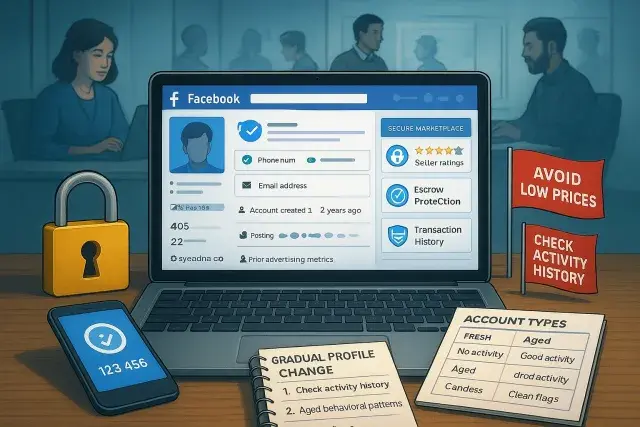
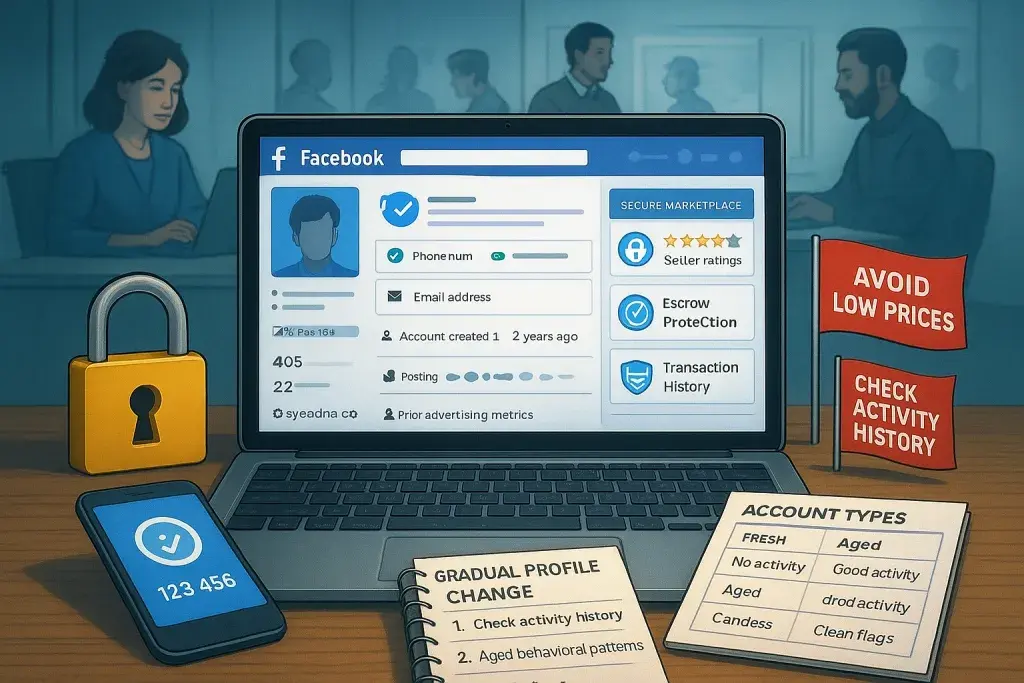
Most people who encounter the market for pre-existing Facebook accounts arrive with the same question: is this something that can be done without exposing yourself to fraud, account loss, or platform penalties? The answer depends almost entirely on how carefully the process is approached. The demand for established social media profiles has grown steadily among marketers, businesses managing multiple brand presences, and individuals who need an account with a credible history and verified status. A fresh account carries no weight - no posting history, no connected phone verification, no aged trust signals that platforms use to determine account legitimacy.
Understanding what separates a reliable transaction from a risky one requires knowledge of what verification actually means on Facebook, where to find reputable sources, and what documentation to look for before any money changes hands. For those who want to buy verified facebook account profiles from established marketplaces, the process involves more than simply completing a payment - it requires evaluating the seller's reputation, understanding what account attributes matter most, and knowing how to secure ownership after the transfer. This article covers each of those stages in practical terms, so that anyone considering a verified social media account purchase can make an informed decision rather than a costly mistake.
Understanding What "Verified" and "Authenticated" Mean for Facebook Accounts
Verification vs. Authentication: Key Differences
These two terms are frequently used interchangeably, but they describe different things. Verification on Facebook historically referred to the blue badge system, which was reserved for public figures, brands, and media entities that Facebook confirmed were who they claimed to be. Authentication, by contrast, refers to the security layer attached to an account - whether it is linked to a confirmed phone number, email address, two-factor authentication, and a consistent login history. When someone offers to sell a "verified" account, they may mean either of these things, so clarifying which applies is essential before proceeding.
A purchase authenticated Facebook profile transaction should be understood as acquiring an account that has passed Facebook's internal security checks: phone-linked, email-confirmed, and free of flags or restrictions. The badge-verified status is a separate category and considerably rarer. Most practical buyers are looking for the authenticated version - an account that behaves like a normal, trusted user profile with a real history behind it.
Why Account Age and Activity History Matter
Facebook's internal systems assign trust signals based on behavioral patterns over time. An account created last week, even if phone-verified, will behave differently in the platform's eyes than one with two years of consistent activity. Older accounts with genuine posting history, connected friends, and interaction records are far less likely to trigger automatic restrictions when used for advertising, group management, or page administration.
When you acquire validated Facebook profile access, you are essentially inheriting that account's behavioral footprint. A clean, aged profile with consistent historical activity is more stable and less likely to face sudden access restrictions. This is why account age is one of the most frequently listed specifications in legitimate account marketplaces and why it directly influences pricing.
Common Misconceptions About Bought Accounts
One widespread misconception is that any purchased account is automatically against platform rules and will be banned immediately upon transfer. The reality is more nuanced. Accounts are flagged when suspicious behavior follows the transfer - rapid changes to profile information, sudden spikes in activity, or login from unusual locations without proper security updates. The account itself is not the problem; abrupt and careless use after acquisition is what triggers detection systems.
Another misconception is that all sellers offering accounts for sale are operating illegally or selling compromised profiles. While risks certainly exist, there are marketplaces with structured verification processes, seller ratings, and dispute resolution systems. The key distinction is between a marketplace with accountability mechanisms and an anonymous seller with no track record.
Who Typically Seeks to Purchase Authenticated Facebook Profiles and Why
The buyers in this market are not a monolithic group. Their motivations vary significantly, and understanding those motivations helps clarify which type of account is appropriate for a given purpose.
Digital marketing professionals represent a large portion of buyers. Running paid advertising campaigns on Facebook is increasingly difficult with newly created accounts, which often face spending limits, policy reviews, and reduced reach. An aged account with prior ad activity carries fewer restrictions from the start. When a marketer seeks to obtain secured Facebook account access with existing ad history, the operational advantage is immediate and measurable.
Businesses managing multiple branded pages or community groups also represent a significant segment. Administrative access to large groups or pages sometimes requires a trusted personal profile as the primary account holder, and a profile with established standing is far less likely to be automatically restricted from administrative functions.
Individuals who have lost access to their original accounts and cannot recover them through standard channels sometimes turn to the secondary market as a practical alternative. Others, particularly those in regions where Facebook access is restricted or where creating accounts requires documentation they cannot easily obtain, find pre-existing profiles a practical solution.
- Digital marketers running paid campaigns who need accounts with established advertising history
- Businesses requiring stable profiles for page or group administration
- Individuals who have permanently lost access to original accounts
- Users in regions with account creation restrictions
- Agencies managing social media on behalf of multiple clients
What to Look for Before You Buy Facebook Account with Verification
Essential Account Attributes to Evaluate
Not all verified accounts offer the same value or stability. Before committing to a purchase, there are specific attributes that determine whether an account will serve its intended purpose reliably.
Account age is the first consideration. Profiles that are at least one to two years old have accumulated the kind of behavioral history that makes them stable in Facebook's systems. An account created six months ago might technically be verified but will lack the depth of trust signals that older accounts carry.
The second attribute is the type of verification attached to the account. A phone-verified account linked to a real, non-VoIP number is considerably more stable than one verified only by email. When evaluating any buy Facebook account with verification offer, confirm that the listed phone number is transferable or that the seller provides the number associated with the account so you can manage future security steps.
Third, examine the account's activity history. An account that has posts, friends, group memberships, and page interactions reads as organic to platform systems. A bare profile with only verification credentials and no social history is considerably less stable for operational use.
- Account age and creation date
- Type and status of phone verification
- Email address associated with the account and whether it can be changed
- Posting and activity history
- Friend count and network quality
- Prior advertising activity, if relevant
- Whether the account has any existing restrictions or flags
Red Flags That Signal a Problematic Seller
Recognizing warning signs before a transaction is far more effective than attempting to recover from a bad purchase. Several patterns consistently indicate unreliable or fraudulent sellers in this space.
Prices that are dramatically below market rate for aged, verified accounts are the most common warning sign. Accounts with genuine history and clean verification status require effort to build or source, and sellers who offer them at a fraction of normal prices are almost always delivering either stolen profiles or freshly created accounts with fabricated histories.
Sellers who refuse to provide any documentation about the account's history, who cannot demonstrate access before payment, or who insist on irreversible payment methods with no recourse are equally problematic. A legitimate seller offering a verified social media account purchase transaction will be able to show account details, provide screenshots of the dashboard and settings, and facilitate a structured transfer rather than simply handing over login credentials in a one-line message.
- Pricing far below comparable accounts on reputable platforms
- Refusal to show account details before payment
- No seller ratings, reviews, or dispute resolution options
- Insistence on irreversible payment methods with no escrow
- Inability to confirm the phone number or email associated with the account
- Vague or inconsistent descriptions of account history
Evaluating Marketplace Reputation and Seller Ratings
The marketplace through which a transaction occurs matters as much as the individual seller. Reputable platforms maintain seller rating systems, handle disputes between buyers and sellers, and often require sellers to verify the accounts they list before those listings go live. These mechanisms do not eliminate all risk, but they substantially reduce the probability of outright fraud.
When reviewing a marketplace, look for public seller feedback, visible transaction history, and clearly stated policies for what happens if an account is misrepresented. A marketplace that offers no recourse once a payment is processed provides no meaningful protection. The presence of an escrow or holding mechanism - where funds are released only after the buyer confirms successful account access - is a strong indicator of a professionally managed platform.
The Step-by-Step Process of Acquiring a Validated Facebook Profile Safely
Preparing Before the Purchase
Before beginning any search for an account to acquire, it is worth clarifying your specific requirements. The type of account you need depends on how you intend to use it. An account meant for advertising management has different requirements than one intended for community group administration. Defining the account age, verification type, and activity level you need before searching prevents wasted time evaluating accounts that do not fit your purpose.
You should also prepare a secure email address and a dedicated device or browser profile for managing any purchased account. Accessing a newly transferred account from the same device and IP address where you manage other accounts can create detection patterns that flag unusual behavior.
Completing the Transaction Securely
Once you have identified a seller and account that meet your criteria, the transaction itself requires careful handling. The safest approach is to use a marketplace that holds funds in escrow until you confirm successful access. Avoid wire transfers, direct cryptocurrency payments to unverified wallets, or any payment structure that offers no path to a refund if the account is not delivered as described.
Request proof of account ownership before any payment is made. This typically means screenshots of the account's settings page, the registered email address, the phone verification status, and any account history the seller is willing to share. A seller who is offering a legitimate acquire validated Facebook profile transaction will have no reason to withhold this basic documentation.
Securing Account Access After Transfer
The period immediately following account transfer is when most problems occur. Changing every security credential too rapidly is one of the most common ways buyers trigger account flags. A more measured approach involves first confirming that all login credentials work correctly, then making changes gradually over a period of days rather than hours.
The first priority is securing the email address. Change it to one you control fully and confirm the change before proceeding. Next, update the phone number if the seller's number was used for verification, but do this only after the email is stable. Enable two-factor authentication using an authenticator app rather than SMS where possible. Wait before making major profile changes - updating the name, profile photo, and cover image all at once immediately after transfer is a behavioral pattern that automated systems can flag.
- Confirm that all provided login credentials grant successful access
- Change the associated email address to one you fully control
- Verify the email change through the confirmation link sent by Facebook
- Update the phone number linked to the account if the seller's number was used
- Enable two-factor authentication through an authenticator application
- Review and update trusted devices and active sessions
- Make gradual profile adjustments over several days rather than all at once
Understanding the Risks and How to Minimize Them
Platform Policy Risks
Facebook's terms of service restrict the sale and transfer of personal accounts. This means that accounts purchased on the secondary market exist in a gray zone from a policy perspective. The platform does not provide a formal mechanism for account transfers, and if the sale is detected - typically through abrupt behavioral changes or a complaint from the original owner - the account may be suspended or permanently disabled.
Minimizing this risk comes down to behavior after transfer. Accounts that show gradual, organic activity following transfer are far less likely to attract automated scrutiny than those that suddenly become highly active across multiple pages, groups, or ad accounts within the first few days. Treat the account as you would a real personal profile - consistent activity, reasonable posting frequency, and no sudden expansion of administrative roles.
Financial and Fraud Risks
The financial risks in this market are real and worth taking seriously. The most straightforward fraud scenario involves a seller who accepts payment and delivers either no account or an account they do not actually control - one that can be recovered by a third party shortly after the sale. A related scenario involves accounts that appear stable at the time of sale but carry hidden flags or restrictions that surface only after the purchase is complete.
Using escrow-based payment through a reputable marketplace significantly reduces but does not entirely eliminate these risks. Reading seller reviews carefully, asking specific questions about account history, and avoiding sellers who cannot answer basic questions about the account they are listing are the most effective additional safeguards. Obtain secured Facebook account access only through channels where your payment is protected until delivery is confirmed.
Security Risks After Account Transfer
Even after a legitimate transfer, security vulnerabilities can remain. If the original account owner retains any recovery options - backup codes, trusted contacts, or linked third-party applications - they could theoretically regain access. This is why changing every security credential and removing all third-party app connections immediately after transfer is essential, even if it is done gradually rather than all at once.
Check the account's connected apps section and remove any integrations you did not create. Review the trusted devices list and remove any devices you do not recognize. These are not optional steps - they are the difference between an account you fully own and one that remains partially accessible to a previous holder.
Comparing Different Types of Accounts Available on the Market
The secondary market for Facebook accounts is not uniform. Accounts vary considerably in their characteristics, and understanding those differences helps buyers make decisions that match their actual needs rather than simply purchasing the cheapest available option.
| Account Type | Typical Age | Verification Level | Activity History | Best Use Case |
|---|---|---|---|---|
| Fresh verified account | Under 6 months | Phone and email verified | Minimal or none | Low-stakes personal use |
| Aged account, no activity | 1-3 years | Phone and email verified | Little to none | Situations requiring older creation date |
| Aged account with activity | 1-5 years | Phone and email verified | Posts, friends, interactions | Marketing, group management, advertising |
| Account with prior ad history | 2+ years | Fully verified | Active with advertising records | Paid advertising campaigns |
The practical value difference between an aged account with genuine activity and a freshly created verified account is substantial. For most professional use cases - advertising, page administration, or community management - an account with at least two years of consistent activity and a clean history is the appropriate choice, even though it commands a higher price. Cutting costs by purchasing an account that does not fit the intended use case typically leads to greater costs from account restrictions or loss later.
Maintaining Long-Term Account Security and Stability
Establishing a Consistent Usage Pattern
After successfully completing a verified social media account purchase and securing all credentials, the most important factor for long-term stability is behavioral consistency. Facebook's systems build trust profiles based on usage patterns over time. Logging in from the same general location, interacting with content in consistent ways, and maintaining regular but not excessive activity all contribute to the platform treating the account as reliable.
Avoid dramatic shifts in posting volume, sudden changes in the types of pages or groups the account interacts with, and rapid expansion of administrative roles on multiple pages simultaneously. Each of these patterns can trigger automated reviews, even on accounts with strong histories. Growth and activity expansion should be gradual and proportional to the account's existing history.
Regular Security Maintenance
Account security is not a one-time task completed at the point of transfer. Maintaining the security of an account you have purchased requires ongoing attention. Review active sessions periodically and log out of any unrecognized devices. Ensure that the email address linked to the account remains active and monitored - a lapsed email account can create recovery vulnerabilities. Keep the phone number current and accessible, as Facebook may require verification through it during login attempts from new devices.
If the account is used for business purposes, consider whether any additional security options available through Facebook's settings - such as advanced protection features for accounts at risk - are appropriate. The more valuable the account is to your operations, the more justified the investment in maintaining its security posture.
Knowing When to Escalate or Seek Alternatives
Even well-maintained purchased accounts can encounter problems. If an account is restricted unexpectedly, the response strategy matters. Attempting to appeal through Facebook's standard channels is always worth doing, even if outcomes are uncertain. Documenting your ownership of the current credentials - including the email and phone number you updated to - strengthens any appeal you submit.
If an account becomes permanently inaccessible and the original purchase was made through a reputable marketplace with dispute resolution, that channel should be used promptly. If the account was purchased through informal channels without any buyer protection, recovery options will be limited. This is precisely why the choice of marketplace is as consequential as the choice of account - it determines what recourse exists if something goes wrong after you acquire validated Facebook profile access.
Questions and Answers
Is it possible to transfer full ownership of a Facebook account after purchase?
Full ownership in a technical sense is achievable - you can change the email, phone number, password, and all security credentials to ones you control exclusively. However, Facebook's platform terms do not formally recognize personal account transfers, so the transfer is not acknowledged by the platform itself. Complete security control is achievable; platform-recognized ownership transfer is not.
What payment method offers the most protection when buying a verified Facebook account?
Escrow-based payment through a structured marketplace provides the strongest protection. Funds held in escrow are only released after you confirm that the account was delivered as described. Avoid irreversible payment methods - particularly peer-to-peer cryptocurrency transfers sent directly to a private seller - as they offer no path to a refund if the account is misrepresented or not delivered.
How long after purchasing an account should I wait before using it for advertising?
If the account already has prior advertising history, you can generally begin running ads sooner, though a period of a few days of normal browsing activity first is advisable. If the account has no prior ad history, warming it up with regular activity for one to two weeks before attempting to run campaigns reduces the likelihood of immediate spending limit restrictions.
Can the original account owner reclaim the account after selling it?
Yes, this is a real risk if security credentials are not fully replaced after transfer. If the original owner retains access to the recovery email, linked phone number, or backup codes, they can potentially regain control. Replacing all security credentials - email, phone number, password, two-factor authentication, and trusted devices - immediately after transfer effectively eliminates this risk.
What distinguishes a marketplace listing an account as "verified" from one claiming it is "aged"?
A verified account label typically refers to the presence of phone and email confirmation on the account. An aged account label refers to the creation date and duration of existence. These are separate attributes, and ideally an account should be both - age without verification offers less stability, and verification without age offers limited trust signals in Facebook's behavioral systems. The most reliable accounts combine both qualities with genuine activity history.
What should I do if the account stops working shortly after purchase?
Contact the marketplace or seller immediately and document everything - screenshots of the account status, the transaction record, and all communications. Reputable marketplaces with buyer protection policies will initiate a dispute process. Simultaneously, check whether any recovery option linked to your updated credentials allows you to restore access through Facebook's standard account recovery flow.